
Avoid Performing Auspicious Tasks During Holashtak

1237

Puja
Holashtak 2026 – Avoid Performing Auspicious Tasks During These Eight Days
Holi is a festival of fun, joy, and celebration. It is a festival of love, but the eight days leading up to Holi are considered unsuitable for performing any auspicious tasks. These eight days before Holika Dahan are known as Holashtak. During Holashtak, performing any auspicious work is considered inauspicious. Let’s learn about the dates of Holashtak 2026 and which tasks should be avoided during this period.
Holashtak 2026: Dates, Significance, and Start of Holi
According to the Vedic Panchang, Holashtak 2026 will begin on Tuesday , 24 February, and end on Tuesday, 3 March, with Holika Dahan. Holika Dahan, celebrated on the full moon day of the Phalguna month, marks the end of Holashtak.
Important Details About Holashtak 2026:
- Start: 24 February 2026
End: 3 March 2026 (Thursday)
Main Festival: Holika Dahan (3 March)
Significance of Holashtak: During this period, auspicious tasks are forbidden, but it is considered an ideal time for devotion and spiritual practices.
The festival of Holi, celebrated with colors, love, and joy, is a special occasion for everyone.
Know More About Holashtak 2026:
The term “Holashtak” is a combination of two words – “Holi” and “Ashtak,” meaning eight. It lasts from the eighth day of the waxing moon phase (Shukla Ashtami) to the full moon day (Purnima). Holashtak holds special significance in Hinduism as it signals the arrival of Holi. During this time, all auspicious and ceremonial activities are halted. However, the period is known for heightened energy, making it an excellent time for meditation, chanting mantras, and performing religious rituals. Specifically, worship of Lord Vishnu and Lord Narasimha is considered highly beneficial.
What is Forbidden During Holashtak?
According to the scriptures, marriage, housewarming, and other auspicious events should not be performed during Holashtak. During this period, the focus should be only on religious activities and spiritual practices.
Holashtak 2026: The Eight Days and Planetary Influences
During Holashtak 2025, the energies of the nine planets (Navagrahas) are particularly active. If any planet in your birth chart is negatively positioned, this time can help bring positive changes through rituals for planetary peace. Each day is dedicated to one specific planet, and performing peace rituals for that planet on the corresponding day is beneficial. Performing tantric worship of Baglamukhi Mata during this time is believed to bring great benefits.
- First Day (Ashtami) – Perform peace rituals for the Moon on Phalguna Shukla Ashtami.
- Second Day (Navami) – Perform peace rituals related to the Sun on Phalguna Shukla Navami.
- Third Day (Dashami) – Perform peace rituals for Saturn on Phalguna Shukla Dashami.
- Fourth Day (Ekadashi) – Focus on peace rituals for spiritual calm on Phalguna Shukla Ekadashi.
- Fifth Day (Dwadashi) – The energy of Jupiter will be prominent on Phalguna Shukla Dwadashi. Perform peace rituals for Jupiter.
- Sixth Day (Trayodashi) – Mercury’s energy peaks on Phalguna Shukla Trayodashi. Perform rituals for Mercury’s peace.
- Seventh Day (Chaturdashi) – Mars’ energy is at its highest on Phalguna Shukla Chaturdashi. Perform peace rituals for Mars.
- Eighth Day (Purnima) – Rahu and Ketu’s energies are most powerful on Phalguna Shukla Purnima. Perform peace rituals for Rahu and Ketu to reduce negative influences.
What Should Be Avoided During Holashtak 2026?
Holashtak 2025 is primarily observed in North India. With the start of Holashtak, certain activities are restricted. This prohibition period lasts from Holashtak to Holika Dahan, during which time auspicious and ceremonial events should not be performed.
Prohibited Activities During Holashtak 2026:
- Child’s Mundan: It is considered inauspicious to perform a child’s head-shaving ceremony during this period.
- Naming Ceremony: Avoid performing a baby’s naming ceremony during Holashtak.
Ear Piercing: Postpone ear-piercing during this time. - Engagement: Avoid getting engaged during Holashtak 2026.
- Marriage: This time is considered inauspicious for weddings.
Housewarming: Refrain from moving into a new house during Holashtak. - Property Decisions: Avoid making property-related decisions during this time.
- Buying a New Vehicle: Wait for Holashtak to pass before purchasing a new vehicle.
- Starting a Business: Wait for an auspicious muhurat before starting a new business.
- Joining a New Job: Avoid joining a new job or switching careers during Holashtak 2026.
- Starting Any New Work: Avoid initiating any new work, whether auspicious or ceremonial, during this period.
Holashtak Prohibition of Auspicious Tasks and Its Significance:
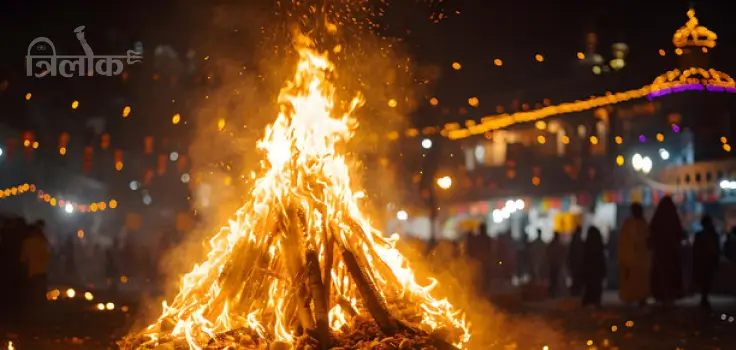
Holashtak begins on the eighth day of the waxing moon phase in Phalguna month. At the place of Holika Dahan, two sticks are installed: one symbolizes Holika, and the other represents Prahlad. These sticks are purified with Gangajal and are worshipped according to rituals. Then, cow dung cakes and wood are placed around the sticks to form the Holika. Finally, colors and rangoli are created around the Holika using gulal and flour. On Phalguna Purnima, Holika Dahan is performed, marking the end of Holashtak 2026.
Why Is Holashtak Inauspicious?
According to some beliefs, during this time, the demon king Hiranyakashyapu subjected Prahlad to severe torments. During these eight days, Prahlad was thrown off a mountain, poisoned by poisonous creatures, and even set on fire, but none of these tortures had any effect on him. Remembering these torments, the eight days before Holi are considered inauspicious, and worship of Lord Narasimha is performed.
Category

Shop For You
Reports for You
Welcome to Trilok App !